

Research
Lab of Recombinant Nano-biomaterials Applications
🔬核心研究領域及願景
-------------------------------------
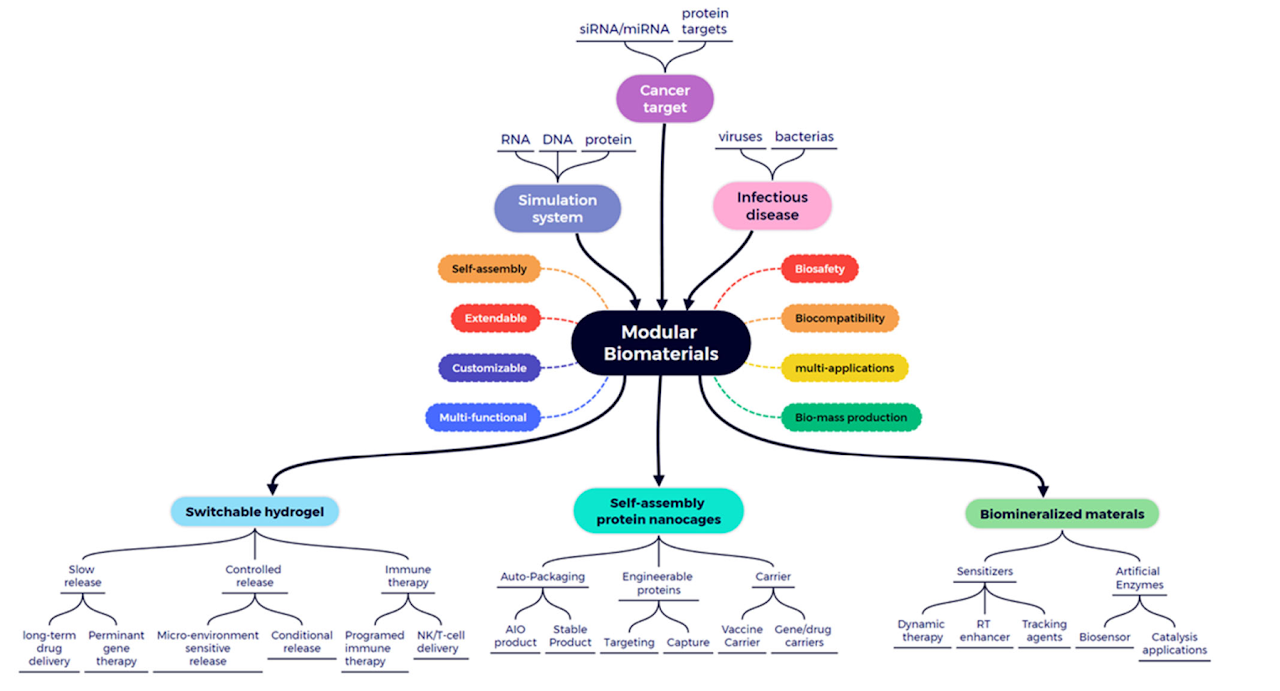
本實驗室核心研究領域專注於重組奈米生物材料 Recombinant Nanobiomaterials、基因工程、基因治療與藥物輸送、生物感測器、癌症細胞生物學及分子模擬等領域的前沿跨領域研究。目標透過跨領域整合與創新,推動重組奈米生物材料與精準醫療的發展,為生物醫學與生物工程領域帶來突破性進展。

奈米材料開發
---------------------
開發各類奈米材料:金屬奈米粒子、奈米簇、高分子奈米粒子及多孔隙奈米材料。
優化合成與製程技術,應用於生醫領域。

重組奈米生物材料
設計與應用
---------------------------
透過基因工程與合成生物技術,設計與生產重組蛋白質與核酸結構。
目標是開發精準功能的奈米生物材料,作為藥物輸送載體、基因治療工具及生物感測元件。

基因治療
與藥物輸送
------------------
專注於核酸骨架開發、RNAi治療靶點篩選、新型基因與藥物載體研發。
特別針對癌症治療應用。

癌細胞
分子機制研究
---------------------
研究蛋白質摺疊與基因調控機制,發掘潛在治療靶點。
特別關注腦癌與兒童腦癌研究。

生物感測器技術
------------------------
積極發展生物感測器技術,提升對癌症與病原體等生物標誌物的檢測能力。

分子模擬技術
----------------------
運用 RNA scaffold 構建、重組蛋白模擬系統,以及蛋白質結構預測工具(如 AlphaFold 和 RoseTTAFold)。
目標是加速生物機制的理解與技術開發。
🔬Laboratory Introduction
-------------------------------------
Our laboratory focuses on cutting-edge research in recombinant nanobiomaterials, genetic engineering, gene therapy and drug delivery, biosensors, cancer cell biology, and molecular simulation.
Through interdisciplinary integration and innovation, our goal is to drive the advancement of recombinant nanobiomaterials and precision medicine, contributing to groundbreaking progress in biomedical sciences and bioengineering.
Nanomaterial Development
---------------------
Develop various types of nanomaterials, including metal nanoparticles, nanoclusters, polymeric nanoparticles, and porous nanomaterials. Optimize synthesis and process technologies for biomedical applications.
Recombinant Nanobiomaterial Design and Applications
---------------------------
Use genetic engineering and synthetic biology techniques to design and produce recombinant proteins and nucleic acid structures. The goal is to develop functionalized nanobiomaterials for drug delivery, gene therapy, and biosensing applications.
Gene Therapy and Drug Delivery
------------------
Focus on nucleic acid scaffold development, RNAi target screening, and the development of novel gene and drug delivery carriers, particularly for cancer treatment.
Cancer Cell Molecular Mechanisms
---------------------
Study protein folding and gene regulation mechanisms to identify potential therapeutic targets, with a particular focus on brain cancer and pediatric brain tumors.
Biosensor Technology
------------------------
Actively develop biosensor technology to enhance the detection of biomarkers for cancer and pathogens.
Molecular Simulation Techniques
----------------------
Utilize RNA scaffold construction, recombinant protein modeling systems, and protein structure prediction tools (such as AlphaFold and RoseTTAFold) to accelerate the understanding of biological mechanisms and technology development.